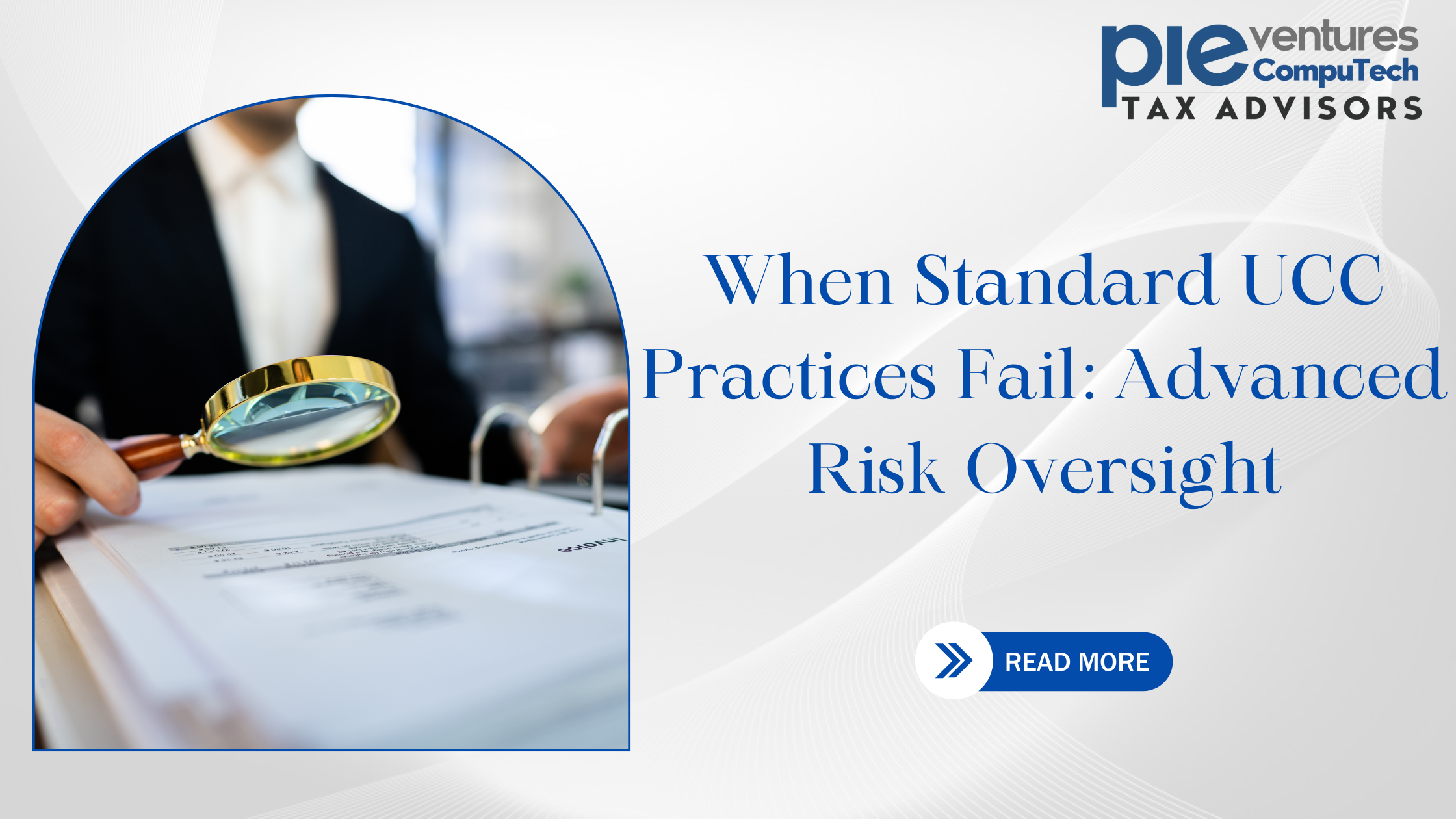
Elevating UCC Oversight
Compliance alone no longer guarantees security. In the complex landscape of secured transactions, even technically flawless filings can mask vulnerabilities that compromise collateral, obscure portfolio risk, and influence high-stakes financial decisions. Expert professionals know that accuracy is just the baseline; true protection emerges from strategic oversight, foresight, and the ability to detect patterns that standard practices often ignore.
The Hidden Gaps in Conventional UCC Practices
Routine filings provide a sense of certainty, yet subtle gaps often go unnoticed until they become critical:
- Monitoring lapses: Expirations and continuations are commonly tracked via spreadsheets or static reminders. Missing a deadline—even briefly—can jeopardize lien priority.
- Fragmented oversight: Organizations managing filings across multiple entities or jurisdictions often lack integrated visibility, allowing blind spots to persist.
- Collateral discrepancies: Changes in debtor obligations, asset substitutions, or amendments may not be fully captured, creating risks in enforcement.
- Nuanced misclassifications: Even seasoned teams can misinterpret lien types or fail to anticipate conflicts, especially in complex, multi-creditor arrangements.
These issues are not trivial. They can silently erode secured positions, impact portfolio valuations, and even influence the outcome of mergers, acquisitions, and lending decisions.
Turning UCC Filings into Strategic Intelligence
Filing accuracy must evolve into a dynamic oversight strategy. Sophisticated stakeholders treat UCC records not just as legal documents, but as predictive intelligence tools. Advanced oversight entails:
- Integrated Portfolio Management: Viewing filings collectively across entities and jurisdictions to detect concentration risk, duplication, or gaps.
- Proactive Expiration Monitoring: Anticipating critical dates and implementing continuations to maintain enforceability and priority.
- Collateral Lifecycle Oversight: Ensuring that amendments, releases, or substitutions are accurately reflected in filings.
- Pattern Analysis: Leveraging historical and cross-entity data to detect anomalies, systemic errors, or exposure trends.
By rethinking filings in this way, organizations can uncover insights that drive strategic decision-making, instead of reacting to compliance failures after the fact.
Consequences of Inadequate Oversight
Even with standard practices in place, lapses can create high-impact consequences:
- Lien priority disputes that disrupt lending arrangements.
- Slower due diligence during high-stakes transactions.
- Unseen exposure to operational or legal risk.
- Misalignment between filings and strategic objectives, weakening governance and investor confidence.
The most revealing failures occur not when filings are inaccurate, but when organizations assume that compliance alone equates to security.
Pie Ventures: Expertise in Advanced UCC Oversight
Pie Ventures specializes in search, filing, and portfolio management services designed to address the gaps that standard UCC practices leave behind. Their approach combines technical rigor with strategic foresight:
- Comprehensive UCC Database: Advanced keyword search and filtering for complete visibility across portfolios.
- Monitoring Expirations and Continuations: Automated tracking to ensure lien priority and enforceability.
- Portfolio-Level Oversight: Dashboards that consolidate filings across entities, jurisdictions, and collateral types to highlight risk and opportunity.
- Expert Guidance: Advisory support to interpret filings, identify vulnerabilities, and implement mitigation strategies.
Through these capabilities, Pie Ventures transforms routine filings into actionable intelligence, helping organizations anticipate issues, strengthen compliance, and optimize secured transaction strategies.
Rethinking UCC Oversight as a Strategic Function
For experienced professionals, the lesson is clear: standard filing procedures are insufficient for managing high-value portfolios or complex lending arrangements. UCC oversight must be treated as an ongoing, strategic discipline:
- Filings should be continuously monitored and updated as living documents.
- Oversight should combine technical accuracy with predictive analysis to uncover latent risks.
- Strategic partners should be leveraged to provide specialized insight, advanced tools, and portfolio-level visibility.
By shifting the focus from routine compliance to strategic intelligence, organizations gain control, foresight, and competitive advantage.
Conclusion
Reliance on conventional UCC practices creates hidden vulnerabilities that can compromise secured positions and strategic decisions. Sophisticated oversight requires a mindset that sees filings not merely as legal obligations but as instruments of intelligence.
Pie Ventures exemplifies this approach by delivering expert-led UCC search, filing, and portfolio management, turning routine compliance into proactive risk management. Organizations that embrace advanced oversight protect their collateral, anticipate exposure, and strengthen confidence in high-stakes financial environments.