Key Payroll Controls Every Growing Business Should Consider
Payroll is often viewed as a routine administrative function: employees work, payroll is processed, and payments are issued. But behind every payroll run is a collection of financial records that ultimately connects with bookkeeping, tax reporting, cash flow, and the company’s overall financial position.
That raises a more important question for business owners:
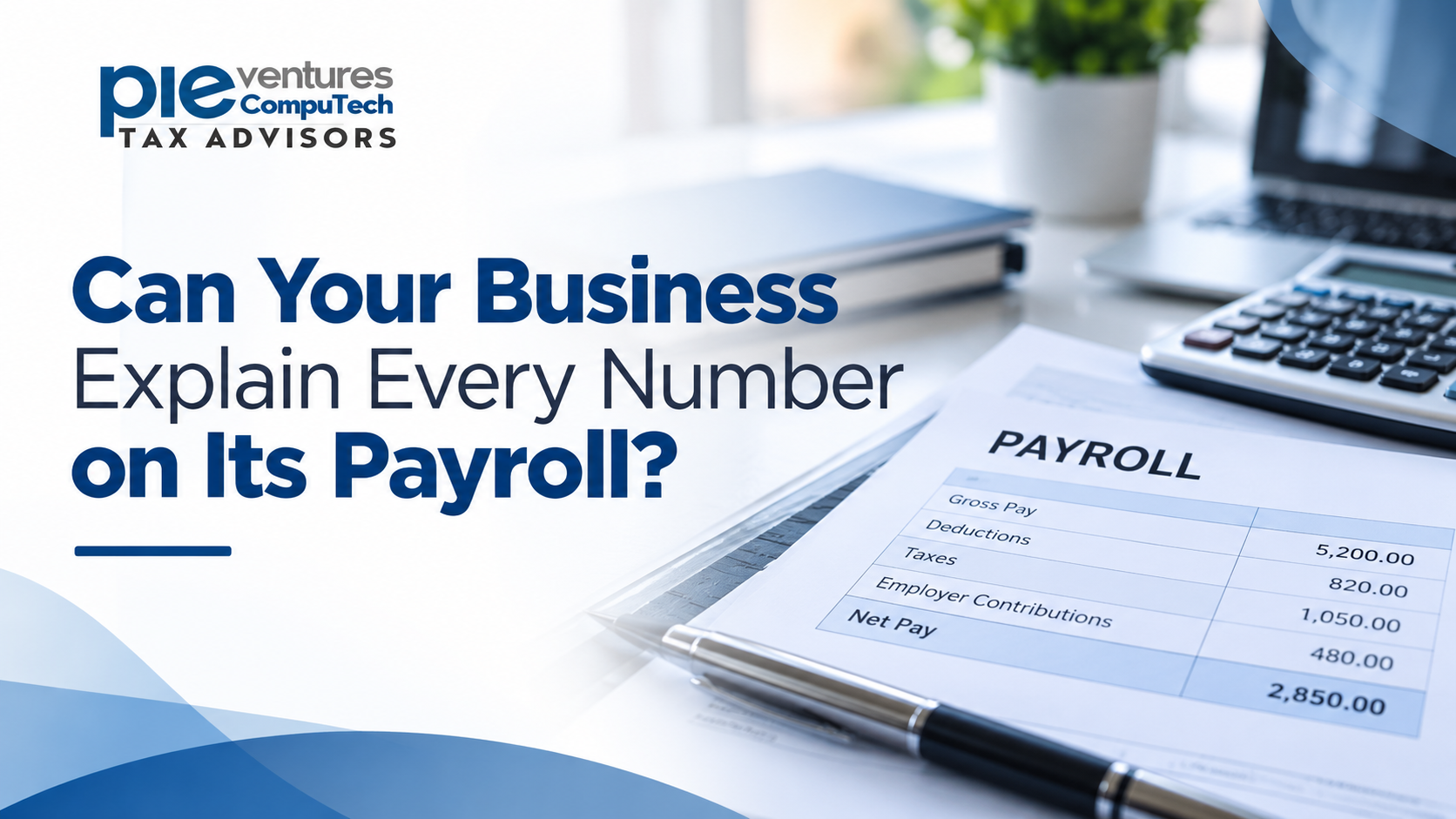
Can your business explain every number on its payroll?
The question is not simply whether employees were paid correctly. It is whether the business can clearly account for wages, adjustments, employer costs, withholdings, payroll liabilities, and other compensation-related amounts—and demonstrate how those figures connect with its financial records.
For a growing business, that level of clarity becomes increasingly important.
Payroll Accuracy Goes Beyond Paying Employees
A payroll process can appear successful when employees receive the correct amount on the expected date. However, payroll has a much broader financial impact.
Payroll information feeds into accounting records and can influence financial statements, tax reporting, cash-flow planning, and internal financial analysis. If the information recorded in payroll does not align with the company’s accounting records, the discrepancy can eventually require investigation and correction.
Pierian Ventures recognizes payroll as part of the broader accounting process rather than an isolated administrative responsibility. Its payroll services are designed to work alongside bookkeeping and financial reporting, helping businesses maintain more consistent financial records.
This connection matters because accurate payroll should produce more than an accurate paycheck. It should produce reliable financial information.
Every Payroll Number Should Have a Clear Basis
Consider a monthly payroll report showing a significant increase in total compensation.
There may be a straightforward explanation. The company may have hired additional employees, approved salary increases, paid bonuses, recorded overtime, or made another legitimate compensation change.
The issue is not that the number changed.
The issue is whether the business can explain why it changed.
A well-managed payroll process should make it possible to trace significant changes back to appropriate records and business decisions. Compensation adjustments should have supporting documentation. Payroll entries should be consistent with employee records. Payroll liabilities should be identifiable and reconcilable.
This creates a useful standard for business owners:
If a payroll figure cannot be explained, it deserves to be reviewed.
Payroll and Bookkeeping Should Tell the Same Story
One of the most important controls is the relationship between payroll and bookkeeping.
Payroll records and accounting records should not operate as separate sets of information. Wage expenses, payroll liabilities, employer costs, and related transactions need to be reflected appropriately in the company’s books.
When these records are aligned, management has a clearer understanding of labor costs and the company’s financial position.
When they are not, discrepancies can accumulate.
For example, a payroll report may reflect one amount while the corresponding accounting entry reflects another. A liability may remain unreconciled. A correction may be processed in payroll without being properly reflected in the books.
None of these situations necessarily indicates serious misconduct or a major accounting problem. They do, however, indicate that the underlying process needs attention.
The objective should be to identify inconsistencies during regular financial review rather than discovering them when tax filings or year-end reporting are already underway.
Business Growth Changes the Payroll Equation
Payroll processes that work well for a small company may not remain appropriate as the business grows.
Additional employees introduce more records and more opportunities for changes. Different compensation arrangements may require additional review. Bonuses, commissions, overtime, benefits, salary adjustments, and employee status changes can make payroll progressively more complex.
Growth can also increase the volume of information moving between payroll, bookkeeping, and tax functions.
This is why payroll should be periodically evaluated as a business evolves.
Pierian Ventures has similarly emphasized that payroll processes need to keep pace with changing business structures, workforce requirements, and compensation arrangements.A process should not simply be capable of handling today’s payroll. It should be structured well enough to accommodate reasonable changes in the business without creating unnecessary administrative risk.
Documentation Is Part of Payroll Management
Accurate payroll depends on accurate underlying information.
Businesses should maintain appropriate records supporting employee compensation and payroll-related transactions. Changes in compensation, employee information, payroll adjustments, and corrections should be properly documented.
Good documentation provides more than protection during an audit or review. It creates continuity.
If a payroll administrator leaves the company, if management needs to investigate a historical transaction, or if an accountant needs to reconcile payroll with the general ledger, organized documentation makes the process significantly easier.
A payroll system may calculate numbers efficiently, but the business remains responsible for understanding the information being produced.
The Importance of Regular Reconciliation
Reconciliation should not be reserved for year-end.
Regular review of payroll information can help identify discrepancies while the underlying transactions are still recent and easier to investigate.
Businesses can consider reviewing:
- Payroll totals against accounting records
- Payroll liabilities and related payments
- Significant changes in compensation
- Employee additions and departures
- Bonuses, commissions, and other variable compensation
- Payroll adjustments and corrections
- Employer payroll costs
- Payroll-related accounts within the general ledger
The specific review process will depend on the size and structure of the business, but the principle remains the same: payroll information should be reviewed as part of the financial reporting process, not treated as a standalone output.
Payroll Information Also Matters at Tax Time
Payroll and tax reporting are closely connected.
Information generated during payroll processing may ultimately contribute to required reporting and tax filings. Errors or inconsistencies identified late in the process can create additional administrative work and may require corrections.
This is one reason businesses should avoid viewing payroll accuracy as a once-a-year concern.
Pierian Ventures’ broader tax and accounting approach emphasizes accurate records, compliance, and year-round support rather than limiting financial oversight to filing deadlines.
For employers, this means payroll should be managed with the same level of care given to other financial records.
A Practical Test for Your Payroll Process
Business owners can evaluate the strength of their payroll process by asking several straightforward questions:
Can we explain significant changes in payroll from one period to another?
Do our payroll records reconcile with our accounting records?
Can we support compensation changes with appropriate documentation?
Are payroll liabilities being tracked and reconciled properly?
Can we identify and explain payroll corrections?
Could another qualified person understand our payroll process if the person currently responsible for it were unavailable?
Is our current process capable of supporting the next stage of business growth?
These questions do not require a business owner to become a payroll specialist. They provide a practical framework for identifying whether the current process offers sufficient visibility and control.
When Professional Payroll Support Becomes Valuable
Managing payroll internally can be appropriate for some businesses. As employee numbers, compensation structures, reporting requirements, and accounting responsibilities increase, however, the administrative burden can become more significant.
Professional payroll support can provide structure around payroll processing, recordkeeping, reporting, and coordination with accounting functions.
The value is not simply having someone calculate wages and issue payments. A well-managed payroll process should help the business maintain accurate records, reduce unnecessary administrative work, and keep payroll information consistent with its broader financial reporting.
Pierian Ventures provides payroll services as part of its wider tax and accounting capabilities, allowing businesses to coordinate payroll with bookkeeping, financial reporting, and tax-related requirements. This integrated approach can be particularly useful for businesses that are growing or whose financial processes have become more complex.
The Standard Should Be More Than Payroll Was Processed
A completed payroll run is not necessarily evidence of a well-controlled payroll process.
A stronger standard is whether the business can explain the figures behind that payroll and demonstrate how those figures connect with its accounting and tax records.
That means knowing what changed, understanding why it changed, maintaining supporting documentation, and reviewing the information regularly.
For business owners, this provides something more valuable than payroll processing alone: financial clarity.
Payroll represents a significant recurring business expense. It deserves to be managed with accuracy, consistency, and appropriate oversight.
Final Thoughts
Every payroll contains information about the business—its workforce, compensation costs, operating expenses, liabilities, and financial commitments.
When that information is accurate and properly connected to the company’s accounting records, it becomes a reliable part of financial management.
When it is fragmented, poorly documented, or difficult to reconcile, payroll can become a source of unnecessary administrative and compliance challenges.
The question, therefore, is not simply whether your business processed payroll correctly.
It is whether your business can explain, support, and reconcile every significant number behind it.
Pierian Ventures helps businesses manage payroll through a structured approach that connects payroll processing with broader accounting and tax requirements. With professional support and organized financial processes, business owners can maintain greater visibility over payroll while focusing their attention on running and growing the business.
Because accurate payroll is not just about paying people correctly. It is about maintaining financial records your business can stand behind.