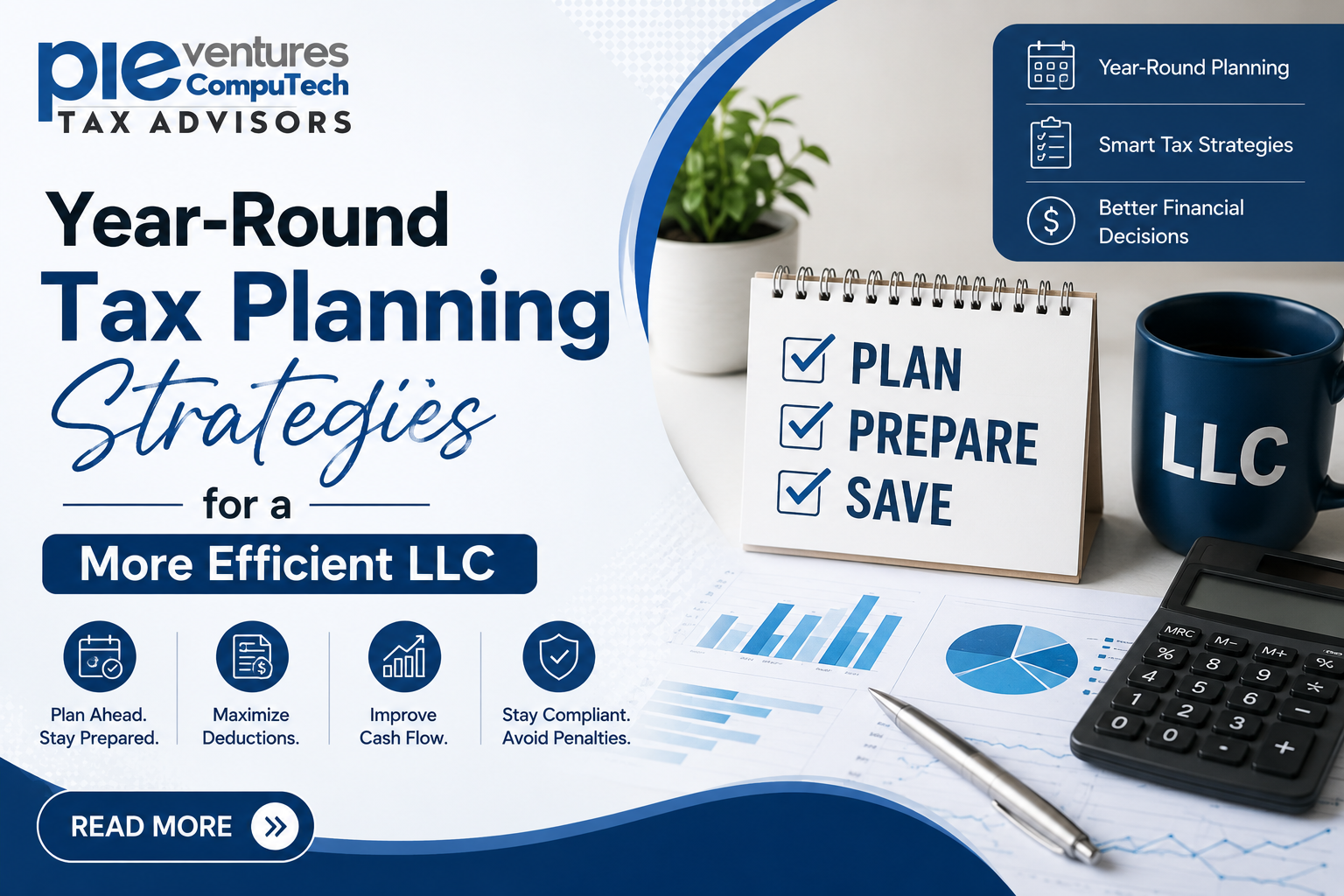
Building a Stronger LLC Through Year-Round Tax Planning
Running a Limited Liability Company (LLC) involves much more than delivering products or services. While many business owners focus on taxes only when filing season arrives, waiting until the end of the year often means losing opportunities to improve tax efficiency.
Year-round tax planning gives LLC owners greater control over their financial position. Instead of reacting to tax liabilities after the fact, proactive planning allows businesses to organize records, manage deductions, estimate taxes accurately, and make informed financial decisions throughout the year.
Whether you operate a single-member LLC or manage a growing multi-member business, consistent tax planning can help reduce unnecessary tax costs, improve cash flow, and support long-term business goals. Rather than treating taxes as a once-a-year responsibility, successful businesses make tax planning an ongoing part of financial management.
Why Year-Round Tax Planning Matters
Many LLC owners assume tax planning begins a few weeks before filing deadlines. Unfortunately, this approach often leads to missed deductions, unexpected tax bills, and unnecessary financial stress.
Tax planning throughout the year allows business owners to review financial performance regularly and make adjustments before year-end. It creates opportunities to improve recordkeeping, estimate tax obligations accurately, and prepare for upcoming business decisions with confidence.
Businesses that review their financial position regularly are often better equipped to respond to changing revenue, unexpected expenses, and evolving tax requirements.
Understand How Your LLC Is Taxed
One of the most important parts of tax planning is understanding how your LLC is taxed.
Unlike corporations, an LLC is generally not a separate federal tax-paying entity unless it elects a different tax classification.
Depending on its structure, an LLC may be taxed as:
- A sole proprietorship
- A partnership
- An S Corporation
- A C Corporation
Each option has different filing requirements, reporting responsibilities, and tax implications.
Choosing the appropriate tax classification is not simply a one-time decision. As your business grows, changes in revenue, ownership, or expansion plans may justify reviewing whether your current tax treatment continues to support your financial objectives.
Maintain Accurate Financial Records
Effective tax planning begins with reliable bookkeeping.
Without organized financial records, it becomes difficult to identify deductible expenses, prepare accurate tax returns, or evaluate the financial health of the business.
Accurate bookkeeping helps LLC owners:
- Monitor income and expenses
- Track business performance
- Identify spending patterns
- Prepare financial statements
- Support tax deductions with proper documentation
- Reduce errors during tax preparation
Keeping financial records current throughout the year also makes it easier to respond to IRS inquiries if supporting documentation is ever requested.
Separate Business and Personal Finances
Many small business owners unintentionally create tax complications by combining personal and business expenses.
Maintaining separate bank accounts and credit cards for business transactions provides several advantages:
- Cleaner financial records
- Easier bookkeeping
- Better expense tracking
- Reduced risk of overlooked deductions
- Simplified tax preparation
Separating finances also reinforces the legal distinction between the business and its owners, which is an important aspect of operating an LLC.
Monitor Business Expenses Regularly
Every legitimate business expense has the potential to reduce taxable income.
However, deductions can only be claimed when expenses are properly recorded and supported with documentation.
Examples of deductible business expenses may include:
- Office supplies
- Software subscriptions
- Professional services
- Business insurance
- Advertising and marketing
- Business travel
- Employee wages
- Training and education
- Equipment purchases
- Internet and communication expenses
Waiting until tax season to organize expenses often results in missing receipts or incomplete records. Reviewing expenses every month helps ensure deductible costs are properly captured.
Estimate Taxes Before They Become Due
Many LLC owners are responsible for making estimated tax payments throughout the year.
Failing to plan for these payments can create cash flow challenges and may result in penalties.
Regular tax projections help businesses:
- Estimate upcoming tax obligations
- Reserve sufficient funds
- Avoid unexpected tax bills
- Improve budgeting decisions
Rather than treating estimated taxes as unexpected expenses, successful businesses incorporate them into their annual financial planning.
Review Cash Flow Frequently
Cash flow plays a significant role in tax planning.
Even profitable businesses may struggle if cash flow is not managed carefully.
Regular cash flow reviews help LLC owners determine whether they have sufficient funds for:
- Operating expenses
- Payroll
- Vendor payments
- Equipment purchases
- Estimated taxes
- Business expansion
A business with strong cash flow management is generally in a better position to respond to opportunities without disrupting daily operations.
Consider Major Purchases Carefully
Equipment, technology, vehicles, and other business investments may have tax implications depending on when they are purchased and how they are used.
Before making significant purchases, business owners should evaluate:
- Available tax deductions
- Depreciation opportunities
- Cash flow impact
- Financing options
- Long-term business needs
Planning purchases strategically rather than impulsively may improve overall tax efficiency.
Plan for Business Growth
As an LLC grows, its tax responsibilities often become more complex.
Growth may involve:
- Hiring employees
- Expanding into new states
- Opening additional locations
- Purchasing commercial property
- Adding partners
- Increasing revenue
Each milestone can affect tax obligations and reporting requirements.
Reviewing tax strategies regularly helps ensure that financial planning keeps pace with business growth.
Evaluate Whether Your Current Tax Election Still Makes Sense
Many LLC owners begin with default tax treatment because it is simple and appropriate during the early stages of the business.
However, as income increases, another tax classification may provide advantages depending on the company’s circumstances.
Regular reviews allow business owners to determine whether their current structure continues to align with their financial goals.
Changing tax elections should never be based solely on tax savings. Business operations, administrative responsibilities, compliance requirements, and future plans should all be considered before making a decision.
Stay Current With Filing Deadlines
Missing tax deadlines can result in penalties, interest, and unnecessary administrative issues.
Year-round planning includes maintaining a calendar for important filing dates such as:
- Estimated tax payments
- Payroll tax deposits
- Annual tax returns
- Information returns
- State filing requirements
- Business registration renewals
An organized compliance schedule reduces the likelihood of missed deadlines.
Keep Documentation Organized
Supporting documentation is essential for every tax return.
Important records include:
- Bank statements
- Receipts
- Vendor invoices
- Payroll records
- Contracts
- Mileage logs
- Equipment purchase records
- Loan documents
Organizing these records throughout the year makes tax preparation significantly more efficient.
Avoid Common LLC Tax Mistakes
Several avoidable mistakes continue to affect many LLC owners.
These include:
- Waiting until tax season to organize records
- Mixing personal and business expenses
- Missing estimated tax payments
- Poor bookkeeping
- Claiming unsupported deductions
- Ignoring changing business circumstances
- Failing to review tax elections regularly
Addressing these issues early helps businesses operate more efficiently while reducing compliance risks.
Work With Professionals Before Major Financial Decisions
Business owners frequently seek tax advice after important financial decisions have already been made.
Whether purchasing equipment, hiring employees, expanding operations, or changing ownership, consulting a tax professional beforehand often provides greater flexibility and better planning opportunities.
Professional guidance allows businesses to evaluate available options before commitments are finalized.
How Pierian Ventures Helps LLC Owners
Managing an LLC involves balancing daily operations with ongoing financial responsibilities. Tax planning becomes more effective when it is supported by accurate bookkeeping, timely reporting, and informed decision-making throughout the year.
At Pierian Ventures, we help LLC owners develop practical tax strategies that align with their business goals. Our services include bookkeeping, payroll support, tax planning, entity advisory, compliance assistance, and tax return preparation. Instead of focusing only on filing deadlines, we work with clients throughout the year to help them maintain organized financial records, identify tax-saving opportunities, and prepare for future business growth.
Whether your LLC is newly established or has been operating for years, regular planning can help you stay compliant while making informed financial decisions with greater confidence.
Conclusion
Year-round tax planning is not simply about reducing taxes—it is about creating a stronger financial foundation for your LLC. Businesses that monitor their financial performance regularly, maintain organized records, prepare for tax obligations, and review their strategies throughout the year are often better positioned to manage growth and avoid unnecessary challenges.
By treating tax planning as an ongoing business activity rather than a year-end task, LLC owners can improve financial organization, make better decisions, and remain prepared for changing business needs.
With the right planning approach and guidance from experienced professionals like Pierian Ventures, your LLC can remain tax efficient, financially organized, and well-positioned for continued success in the years ahead.